

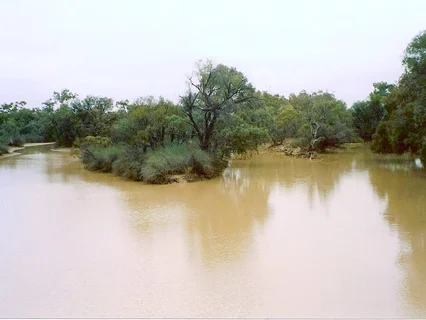


One of Australia’s Last Free-Flowing Rivers
The Paroo River rises in Queensland’s Channel Country before flowing south-west into north-western New South Wales, eventually joining the Darling River during flood events. The river and its floodplains provide refuge for thousands of birds and support wetlands recognised as internationally important for waterbirds. More than 55 bird species have been identified in the region, including the blue-billed duck and speckled duck, while over 60,000 waterbirds can gather along the river system during wet periods. The Paroo also contains important Aboriginal cultural sites, including bone middens, quarries and stone tool workshop areas connected to thousands of years of occupation and cultural activity.
The Campaign
In 1999, the Wilderness Society began campaigning for the protection of the Paroo River as part of its broader Wild Rivers work. Campaigners argued that the river should be protected from dams, weirs and irrigation developments that had heavily altered many other rivers within the Murray–Darling Basin. The Wilderness Society attended community advisory panel meetings, made formal submissions and lobbied politicians and government agencies in Queensland. The campaign also worked alongside scientists including Richard Kingsford, then Principal Scientist with the New South Wales National Parks and Wildlife Service. National environmental organisations also joined the Paroo River Association to advocate for stronger river protections.
Protection Achieved
On 18 July 2003, Queensland Premier Peter Beattie and New South Wales Premier Bob Carr signed the Paroo River Agreement. The agreement protected the Paroo River from dams, weirs and irrigation development, helping preserve one of Australia’s last major free-flowing inland river systems.
Legacy
The Paroo River campaign became an important milestone in Australia’s river conservation movement. It reinforced the ecological importance of free-flowing rivers and helped shape later Wild Rivers campaigns across Queensland and inland Australia. As Wild Rivers campaigner Larissa Cordner said:
“This agreement is of huge significance to the protection of wild and natural rivers all over Australia. The recognition that the Paroo received to protect its high conservation value should now be extended to the country’s remaining wild and natural rivers.”