



Forests Under Pressure
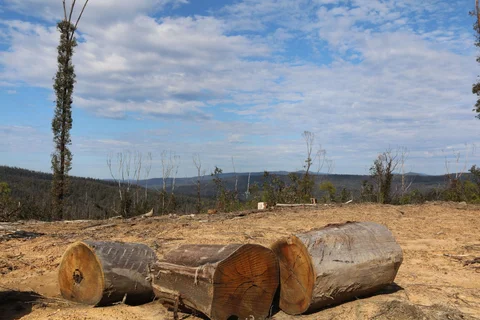
Since 1969, the Eden woodchip export mill had been operated by the Japanese company Daishowa. When the company sought a 15-year extension to its woodchip export licences, the Wilderness Society incorporated the issue into the broader national campaign to protect Australia’s native forests from industrial logging and woodchipping. Nearby forests, including Coolangubra, were actively being logged. The region contains diverse forest ecosystems and important wildlife habitat, alongside landscapes such as the gorges of Myamba and Stockyard Creeks.
The Campaign
Throughout the 1990s, campaigners used public outreach, protests and community organising to oppose the expansion of woodchipping operations. Campaign activities included market stalls, letter-writing campaigns, media interviews and public meetings across New South Wales. In 1992, protesters gathered outside the Eden Woodchip Mill as opposition to logging intensified. One of the campaign’s most visible actions became the Walk Against Woodchips in 1999. Campaigners walked from Sydney to Eden, stopping in towns including Ulladulla and Milton to hold public meetings and discuss forest protection with local communities. In another protest, more than 100 advocates gathered outside the woodchip mill holding a banner reading:
“Time to save native forests!” The campaign was organised by the Wilderness Society alongside local activists and conservation groups including the Nature Conservation Council.
Limited Protection
Despite ongoing protests and public pressure, the Greiner Government continued supporting logging operations and the Eden mill remained active. However, the campaign contributed to broader forest protection debates across New South Wales. In 1998, the Eden Regional Forest Agreement protected approximately 67,000 hectares of forest in south-east New South Wales. The Wilderness Society has continued campaigning for stronger protections for native forests and against woodchipping across Australia.
Legacy
The Walk Against Woodchips became part of the broader movement against industrial native forest logging during the 1990s. It highlighted the growing public concern over woodchipping and demonstrated how grassroots organising, public protest and regional community engagement could bring national attention to forest protection campaigns.