

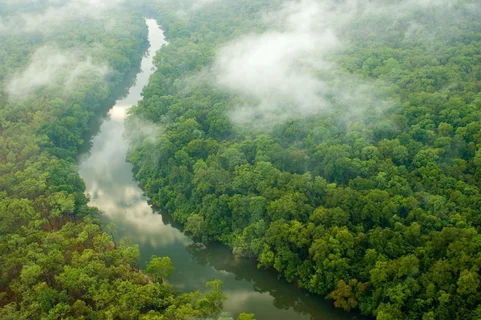


Rivers of Northern Australia
Northern Australia’s rivers are shaped by dramatic boom-and-bust climate cycles. Long dry periods are followed by intense rainfall and flooding, creating bursts of life across wetlands, floodplains and river systems. When these rivers flow into the sea, they deliver nutrients that sustain marine nurseries and coastal ecosystems. Freshwater ecosystems are globally important for biodiversity. Although freshwater makes up only a small percentage of Earth’s water, it supports around 41% of fish species worldwide. Queensland’s wild rivers also provide habitat for migratory birds, mammals, reptiles and countless aquatic species.
The Campaign Begins
Following the Paroo River victory, the Wilderness Society launched the Wild Rivers campaign in 2000. The campaign sought stronger protection for Queensland’s remaining free-flowing river systems through dedicated legislation. Campaigners worked to raise awareness about the ecological significance of the rivers and the threats posed by dams, mining, water extraction and large-scale development. The Wilderness Society collaborated with organisations including the Queensland Conservation Council, Environmental Defenders Office, Cairns and Far North Environment Centre, Toowoomba and Region Environment Council, North Queensland Conservation Council and Sunshine Coast Environment Council. Traditional Owner groups were also consulted throughout the process.
The Wild Rivers Act
In 2004, the Queensland Government announced plans to introduce protections for wild rivers. The Wilderness Society continued campaigning to strengthen the proposed legislation. On 28 September 2005, the Wild Rivers Act passed through the Queensland Parliament. The legislation allowed lower-impact activities such as tourism, fishing and grazing while restricting more intensive development in designated river systems. The Wilderness Society also successfully advocated for Indigenous ranger involvement in managing declared wild rivers. The first six river basins nominated for protection included Settlement Creek, Gregory River, Morning Inlet, Staaten River, Hinchinbrook Island and Fraser Island. By 2013, twelve Wild River declarations had been established across Queensland.
Rollback of Protections
In 2012, Campbell Newman was elected Premier of Queensland. The following year, the Newman Government began dismantling Wild River protections. In 2014, the Wild Rivers Act was repealed and replaced with significantly weaker legislation. Despite the setbacks, the campaign continued to shape later river protection movements across Queensland and northern Australia.
Legacy
The Wild Rivers campaign led to Australia’s first dedicated legislation specifically designed to identify and protect wild rivers. It also highlighted the importance of free-flowing river systems for biodiversity, Indigenous land management and long-term ecosystem health. As Felicity Wishart wrote in Wilderness News in 2005:
“After hours of debate and in the face of pressure from powerful industry sectors, a piece of legislation, the Queensland Wild Rivers Act, was born. This is the nation’s first comprehensive, stand-alone legislation to identify and protect wild rivers.”