

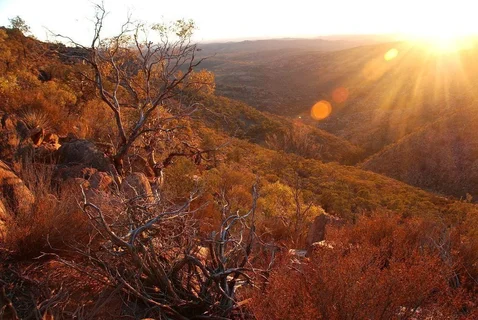


A Landscape of Geological and Cultural Significance
Located around 600 kilometres north of Adelaide in the northern Flinders Ranges, Arkaroola is known for its dramatic granite peaks, deep gorges, waterholes and rugged mountain ranges. The region is internationally recognised for its geological importance, including discovery of one of the oldest fossilised reefs ever found. Arkaroola also supports remarkable biodiversity, including more than 160 bird species, endangered yellow-footed rock-wallabies, giant geckos and molluscs found nowhere else on Earth. The area is part of the traditional lands of the Adnyamathanha people. Within Adnyamathanha belief, Mount Gee—known as the Crystal Mountain—is the resting place of the spiritual creator Virdnimura.
The Threat
In 2007, mining company Marathon Resources announced plans to explore for uranium in Arkaroola. Exploration began after the company opened offices in July 2007. Conservationists feared uranium mining would permanently damage one of South Australia’s most significant wilderness and cultural landscapes. Concerns escalated in 2008 when Marathon Resources illegally dumped mining waste at Mount Gee, a site of major spiritual significance to the Adnyamathanha people. The incident led Premier Mike Rann to publicly describe the company as “cowboys”.
The Campaign
From the moment drilling rigs and bulldozers arrived, the Wilderness Society worked alongside the Sprigg family, Traditional Owners, conservationists and politicians from across the political spectrum to oppose mining in Arkaroola. Campaigners used petitions, media outreach, public events and community mobilisation to build pressure on the South Australian Government. A major public consultation process known as “Seeking a Balance” was released by the government in 2009 to examine the future of the Northern Flinders Ranges. When submissions were published in 2010, 82% supported banning mining in Arkaroola. The Wilderness Society also worked closely with South Australian communities and political leaders to push for the strongest possible legal protections for the area.
Mining Banned
On 22 July 2011, Premier Mike Rann announced a complete ban on mining within the Arkaroola Mountains. Five days later, the Governor formally exempted the area from the South Australian Mining Act under Section 8, preventing mining from proceeding. In 2012, the Arkaroola Protection Act passed through the South Australian Parliament, permanently prohibiting mining, mineral exploration and grazing across the protected area. Arkaroola is now being considered for both National and World Heritage listing.
Legacy
The Arkaroola campaign became one of South Australia’s most significant modern conservation victories. It demonstrated the strength of broad alliances between Traditional Owners, local communities, scientists and environmental groups in protecting culturally and environmentally significant landscapes from mining.