



A Unique Cape York Wilderness
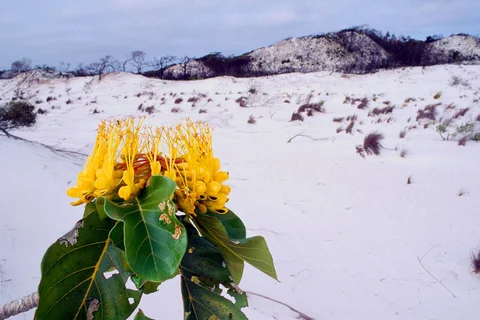
Shelburne Bay covers around 250 square kilometres of dunes, forests and freshwater lakes on Cape York Peninsula. The area is internationally recognised for its enormous white silica sand dunes, some rising between 150 and 200 metres high. The region also supports threatened species including the palm cockatoo and several rare orchid species. Much of Shelburne Bay remains largely undisturbed and is known for its exceptional natural beauty. The Wuthathi people have longstanding cultural connections to the area. According to Wuthathi tradition, the giant white dunes represent the underbelly of a giant manta ray washed ashore in ancient times.
The Threat
In 1967, the Queensland Government granted two sand mining leases across Shelburne Bay. The leases remained inactive for decades, but by the early 2000s they were due for renewal. The region’s sand—around 99% pure silica—made it highly attractive to mining interests. Conservationists warned that mining would irreversibly damage one of Australia’s most pristine dune systems and threaten culturally significant landscapes.
The Campaign
In 2002, the “No Mines at Shelburne Bay” campaign was launched by the Wilderness Society, the Australian Conservation Foundation and the Wuthathi Tribal Council. Campaigners mobilised public support through rallies, scientific advocacy and thousands of campaign postcards sent to the Queensland Government. A major public rally was held just one day before the mining leases were due to expire. The campaign also received support from Don Henry from the Australian Conservation Foundation and Arnold Wallis. Avant Card also supported the campaign by printing and donating campaign postcards calling for cancellation of the leases.
Mining Leases Cancelled
In March 2003, Premier Peter Beattie and the Queensland Mines Minister announced the government would cancel the mining leases and protect Shelburne Bay from sand mining. Special legislation was later passed to formally extinguish the leases. The decision marked a major conservation victory for Cape York and for the Wuthathi people.
Legacy
The Shelburne Bay campaign became a landmark example of successful collaboration between Traditional Owners and conservation groups to protect culturally and environmentally significant landscapes. It also demonstrated the growing public support for protecting Cape York’s remaining wilderness areas from industrial development. As the Queensland Premier’s office later wrote to the Wilderness Society:
“The move to cancel these mining leases should be seen by your membership as a measure of the iconic value this government attributes to the spectacular natural features of Shelburne Bay. It is also further acknowledgement by this government of the intrinsic value of wilderness in providing real quality of life for as much as possible.”—Letter to Lyndon Schneiders of the Wilderness Society, from the office of Queensland Premier Beattie, 2003