

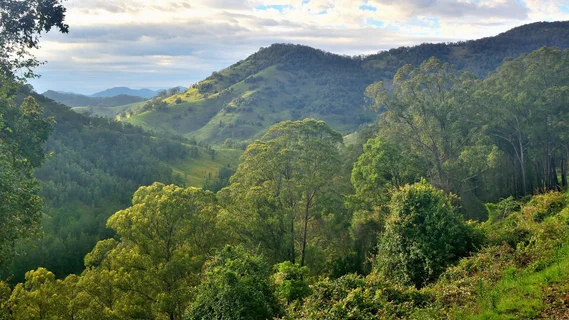


A Refuge of Rainforest and Alpine Forests
Barrington Tops National Park protects around 76,000 hectares of diverse forest ecosystems. The landscape ranges from subtropical rainforest and wet gullies to alpine regions covered with snow gums, Antarctic beech and tree ferns. Its remoteness has allowed many species to survive with relatively little disturbance. Wildlife found within the park includes bare-nosed wombats, swamp wallabies and Superb lyrebird.
The Campaign
During the late 1980s and early 1990s, the Wilderness Society Newcastle campaigned for stronger protection of Barrington Tops and for wilderness declarations across the remaining forests. Working alongside local communities and supporters, campaigners organised protests, lobbied government, encouraged letter-writing campaigns and conducted forest tours to help people experience the landscape firsthand. The campaign aimed to secure protection not only for existing national park areas, but also for forests in the north that were still targeted for logging.
Protection Expanded
The campaign contributed to major conservation gains for Barrington Tops. The national park was expanded from approximately 36,000 hectares to more than 80,000 hectares, protecting extensive subtropical forests from logging. The area also received wilderness declaration status. In 1996, the Bob Carr Government declared 12 new wilderness areas across New South Wales, including 120,000 hectares of productive state forest in the Barrington Tops region. When announcing more than one million hectares of wilderness protection across the state, Bob Carr publicly acknowledged the contribution of the Wilderness Society.
Legacy
The Barrington Tops campaign demonstrated how sustained local organising, public advocacy and community engagement could gradually shift political resistance and secure large-scale forest protection. It also reinforced the growing role of wilderness declarations as a conservation tool in New South Wales during the 1990s. As Bob Carr said in 1996:
“The Wilderness Society is insistent, obstinate, unrelenting, but that’s their role. They’re voluntary conservationists and their role in delivering great conservation decisions can’t be overlooked.”