



A Forest on the Edge
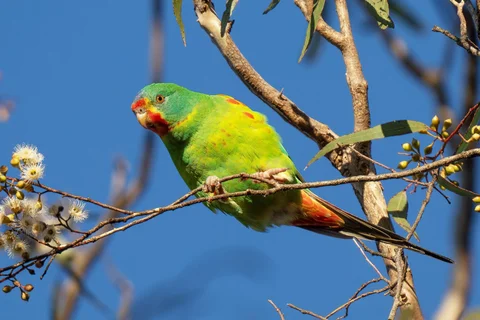
The Lemonthyme forests contain lush rainforest ecosystems, alpine vegetation and river systems bordering Tasmania’s central wilderness. The area supports wildlife including pademelons, Tasmanian devils, wallabies, yellow-tailed black cockatoos and Swift parrot. At the end of 1985, the Bob Hawke Government announced that Tasmanian woodchip export licences due for renewal would be granted, and that no major new forest areas within Tasmania’s wilderness region would receive protection. The decision intensified conflict over logging in Tasmania’s forests.
The Campaign
The Wilderness Society responded with a major public campaign to protect the Lemonthyme and Southern Forests. In 1986, a photograph of Bob Brown being attacked by forestry workers during a protest blockade appeared on front pages around the country. The image became one of the defining moments of Tasmania’s forest campaigns and helped drive national attention towards the issue. Within months, the Federal Government passed legislation suspending logging in the Lemonthyme and Southern Forests while an inquiry examined whether the area qualified for World Heritage protection.
The Helsham Inquiry
In 1988, the Federal Government commissioned the Helsham Inquiry to assess the World Heritage values of the Lemonthyme and Southern Forests. The Wilderness Society campaigned heavily throughout the inquiry process, promoting the value of World Heritage protection to both the inquiry and the broader public. Books, posters, letterbox leaflets and extensive media coverage formed part of the campaign. When the inquiry ultimately concluded that only small parts of the forests were of World Heritage significance, the Wilderness Society continued pushing for broader protection. Thousands of letters were sent to Canberra calling for the forests to be saved, while full-page newspaper advertisements argued for stronger action. Despite the campaign pressure, Federal Cabinet decided on a fractured World Heritage extension that protected only selected high-profile areas, leaving large areas of forest open to continued logging for woodchips.
A Growing Movement
The campaign drew support from across Australia and internationally. Globally renowned violinist and Wilderness Society patron Yehudi Menuhin publicly supported the forests during a concert tour of Australia. When the Australian Labor Party held its national conference in Nipaluna / Hobart, thousands attended a Wilderness Society rally outside the venue. The crowd included 93-year-old landscape painter Lloyd Rees, who delivered an impassioned plea for forest protection. The Forest Action Network (FAN) also played an important role by supporting coordination, information sharing and statewide strategy discussions between forest campaign groups.
Legacy
The Lemonthyme campaign became one of the defining forest struggles of the 1980s. It intensified national debate about woodchipping, World Heritage protection and the future of Tasmania’s forests, while helping build a larger and more coordinated forest conservation movement. As Yehudi Menuhin said:
“People make the mistake of believing beauty is purely ornamental, but what is beautiful is what is practical. It exists in the trees and animals and air we breathe. We’re part of a larger unit of life. That must be understood.” And as Peter Robertson wrote in Wilderness News in 1984:
“The Lemonthyme issue will […] be an important battle to win if we are to establish the preservation of remoteness as a key element in the conservation of our remaining wilderness areas.”