



A Desert Alive with Diversity
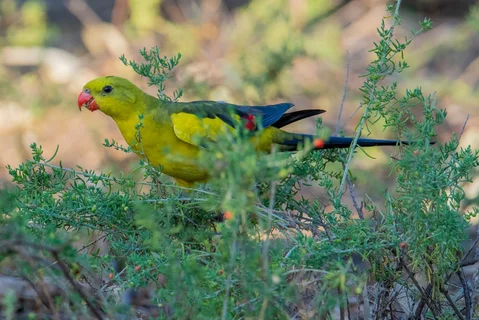
The Mallee is one of the few semi-arid regions on Earth where extensive areas of natural vegetation remain relatively undisturbed from industrial societies. At first glance, the landscape can appear sparse and harsh. But after rain and during spring, the desert bursts into colour with wildflowers including spider orchids and poached-egg daisies. The region supports an extraordinary mosaic of ecosystems and wildlife. Rare and endangered species including the Malleefowl, western pygmy possum, Mallee emu-wren, black-eared miner and Mallee ningaui all survive in these fragile desert habitats, alongside several rare butterfly species.
The Campaign
As pressure from broombush harvesting intensified, the Wilderness Society led a campaign to secure protection for the Mallee wilderness. Members and supporters camped in the region, attended public meetings and wrote letters urging the Victorian Labor Government to protect the area before industrial activity caused irreversible damage. The campaign drew support from other conservation organisations, including the Victorian National Parks Association, and became a major push to recognise the ecological importance of Victoria’s arid north-west. In 1989, the Land Conservation Council conducted the Mallee Area Review, examining the future management and protection of the region. Then in May 1990, campaigners celebrated a major victory: the protection of Big Desert and Sunset Country.
A Major Conservation Outcome
The campaign ultimately secured protection for approximately 856,000 hectares of Mallee wilderness and bushland. This included the creation of Murray-Sunset National Park and strengthened protections for existing parks including Wyperfeld National Park, Murray-Kulkyne Park and Lake Albacutya Park. Broombush harvesting—considered a major threat to the region’s fragile ecology—was later banned from all public land.
Legacy
The campaign also helped secure one of the largest protected semi-arid landscapes in south-eastern Australia.