

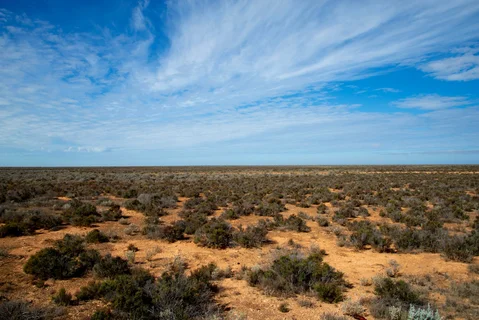


A Landscape Above and Below Ground
The Nullarbor is home to extraordinary geological and cultural features. Along the coastline, Ngargangurie—also known as the Bunda Cliffs—forms the world’s longest south-facing cliff line, stretching for more than 100 kilometres and rising between 60 and 120 metres above the Southern Ocean. Below the surface lie extensive limestone cave systems formed between two and three million years ago during the Pliocene period. These caves preserve important records of the region’s environmental and geological history. The area is deeply significant to the Mirning people. Mirning Country is strongly connected to Whale Dreaming traditions, with ceremony, song and dance associated with whales migrating through the Great Australian Bight.
The Campaign
In 2005, the Wilderness Society nominated the Nullarbor Plain for protection under South Australia’s Wilderness Protection Act. The campaign focused on securing long-term protection for one of South Australia’s largest remaining wilderness areas. In June 2013, the Nullarbor Regional Park and Nullarbor Regional Reserve became part of the newly declared Nullarbor Wilderness Protection Area. The campaign for stronger recognition and protection has continued. For almost two decades, the Wilderness Society has advocated for the Nullarbor and Great Australian Bight to receive World Heritage listing. In 2022, the Wilderness Society and the Mirning Council of Elders jointly proposed World Heritage listing for the region. A draft consultation document was prepared and discussions began with South Australian, Australian Government and IUCN World Heritage officials.
Legacy
The Nullarbor campaign has helped build recognition of the ecological, geological and cultural significance of one of Australia’s most iconic landscapes. It has also reinforced the importance of Traditional Owner leadership in proposals for future protection and World Heritage recognition. As Bunna Lawrie said:
“In the Karrajia, the time of the beginning long ago, when light and life were young and learning together. In our belief if you listen, learn, understand and observe, then you will receive wisdom and knowledge. For this is the Mirning way.”