

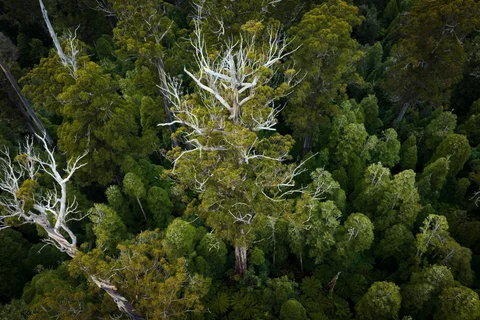


Forests of Giants
Tasmania’s Southern Forests contain extensive old-growth forests dominated by mountain ash (Eucalyptus regnans), the tallest known flowering trees in the world. These forests provide habitat for species including owls, pygmy possums, bats, cockatoos and sugar gliders, many of which depend on tree hollows found only in aging forests. The region is also home to threatened species including the Tasmanian wedge-tailed eagle, Swift parrot and the Tasmanian devil. The forests also contain important Aboriginal heritage and landscapes of major ecological significance.
Logging Intensifies
In 2005, clearfell logging for woodchips intensified across Tasmania’s southern forests. At the time, Tasmania exported more woodchips overseas than all other Australian states combined. The escalating destruction became the focus of major protests and forest blockades. That same year, Forestry Tasmania accidentally burned one of the largest known trees in Australia during a regeneration burn. The tree, known as El Grande, was a massive Eucalyptus regnans located in the Florentine Valley. Its destruction became a defining symbol of opposition to industrial logging in Tasmania.
The Campaign
Between 2004 and 2012, conflict between conservationists, logging company Gunns Ltd and the Tasmanian Government dominated environmental politics in Tasmania. A major turning point came with the failed “Gunns 20” lawsuit, in which Gunns Ltd pursued legal action against environmental activists and organisations. Defendants included the Wilderness Society, national campaigns director Alec Marr, Tasmanian campaign manager Geoff Law and Wilderness Society founder Helen Gee. At the same time, public opposition intensified against a proposed Gunns pulp mill in the Tamar Valley. The Wilderness Society responded with a corporate campaign targeting Gunns’ financial backers. In 2008, the campaign successfully pressured ANZ Bank to withdraw funding support for the proposed pulp mill, contributing to a major decline in Gunns’ share price. As Gunns’ financial position weakened and cheaper Asian woodchips entered global markets, the company’s position deteriorated rapidly.
Political Change and Protection
By 2010, Gunns had entered receivership, the Tasmanian Premier had resigned and Forestry Tasmania was being financially supported by taxpayers. At the same time, Labor lost its parliamentary majority and entered into a coalition government with the Greens. The changing political climate created opportunities for negotiations between conservation groups and the logging industry. By 2012, an agreement had been reached. In 2013, the Tasmanian Forestry Agreement was legislated, providing World Heritage protection for the Weld, Upper Florentine and Styx valleys.
Legacy
The Southern Forests campaign became one of the defining environmental struggles in modern Tasmania. It combined forest blockades, corporate campaigning, legal battles and political negotiation, while drawing national attention to industrial logging and the relationship between government and the logging industry. The campaign also contributed to some of the largest forest protection outcomes in Tasmania in decades.