

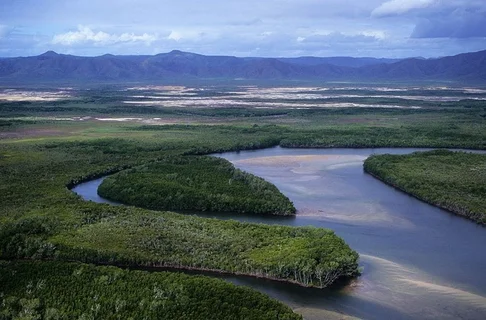


A Vast Coastal Wilderness
The Starcke region covers approximately 225,000 hectares in far north Queensland. The landscape includes around 120 kilometres of coastline between Cape Flattery and Cape Melville, alongside mangroves, fringing coral reefs, paperbark forests, rainforest, freshwater wetlands and extensive sand dune systems. The area also supports important seagrass habitat used by dugongs and green sea turtles along the east coast’s largest seagrass pasture.
The Campaign
In March 1993, the Wilderness Society obtained a copy of a Wall Street Journal advertisement offering the Starcke wilderness property for sale for $26 million. The organisation responded by launching a national media campaign opposing the overseas sale of the property. In April 1993, Wilderness Society representatives met with the Juunjuwarra Traditional Owners to alert them to the proposed sale and seek permission to campaign for protection of the area. Permission was granted, and the first phase of the media campaign began. The campaign focused on preventing the sale of the property and returning the land to Traditional Owners.
Protection Secured
In 1993, the 225,000-hectare Starcke property was saved from overseas sale. Then in 1994, the Federal and Queensland Governments announced the purchase of the property. The purchase resulted in the area becoming national park and Aboriginal freehold land. The land was later handed back to Traditional Owners in stages.
Legacy
The Starcke campaign became a significant example of rapid environmental mobilisation and collaboration with Traditional Owners to secure long-term protection for a major wilderness area. It also protected one of the largest remaining undeveloped wilderness coastlines on Australia’s east coast. As Tracey Kluck and Kareen Jurd wrote in Wilderness News in 1994:
“As the largest wilderness coastline left on the entire east coast of Australia it is clearly a decision that will last for all time for ALL Australians. But, most importantly for the traditional owners of Starcke it is a decision that enables them to reach back to their forebears.”