



A Vast and Undisturbed Landscape
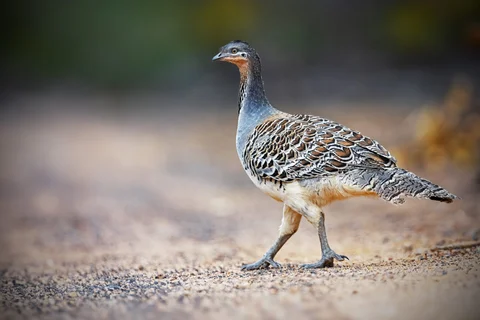
Covering around 4 million hectares, Yellabinna contains extensive mallee-covered dunes and open woodland ecosystems. What can initially appear as a uniform landscape is in fact highly diverse, containing subtle ecological variations as well as dramatic salt lakes, claypans and rocky outcrops with their own communities of plants and animals. The region provides important refuge habitat for species that have disappeared or declined elsewhere. Species such as Grevillea Treueriana are found only in Yellabinna, alongside endangered and vulnerable species including the Malleefowl and sandhill dunnart. The area also holds deep cultural significance for the Wirangu people, Kokatha people and Mirning people. Rockholes throughout the landscape once served as refuges during dry periods, with permanent water sources such as Ooldea playing an important role for Aboriginal communities.
The Threat
Although Yellabinna escaped large-scale pastoral development due to the lack of groundwater, other pressures continued to grow. Tracks created by visitors to the region were spreading across the landscape, while mineral exploration posed risks of long-term disturbance and industrial development. Concerns also grew that exploration activity could leave permanent scars on one of Australia’s largest remaining intact mallee ecosystems.
The Campaign
Following recommendations from South Australia’s Wilderness Advisory Committee in 1996, the Wilderness Society began campaigning in 2003 for stronger protection of Yellabinna. The campaign called for more than 500,000 hectares to be protected under the Wilderness Protection Act—the highest level of protection available under South Australian law. The Wilderness Society also proposed the creation of a national park adjacent to the proposed Wilderness Protection Area.
A Partial Victory
In 2005, the South Australian Government proclaimed the Yellabinna Wilderness Protection Area, protecting more than 500,000 hectares of the region. The campaign was considered a significant conservation win. However, the proposed adjoining national park was never established, and mining and mineral exploration remained permitted across the remaining 3.5 million hectares of Yellabinna.
Legacy
The Yellabinna campaign highlighted both the opportunities and limitations of wilderness protection in large remote landscapes. It also reinforced the importance of protecting intact ecosystems before industrial impacts permanently alter them. As Greg Ogle later reflected:
“I sat upon the rocky outcrop of Oolabinna Rocks in the centre of the Yellabinna wilderness and watched the sun rise over the vast expanse of mallee. As the light slowly illuminated row after row of dunes stretching out before me, I had an enormous sense that I was witnessing something essentially unchanged over thousands of years.”