

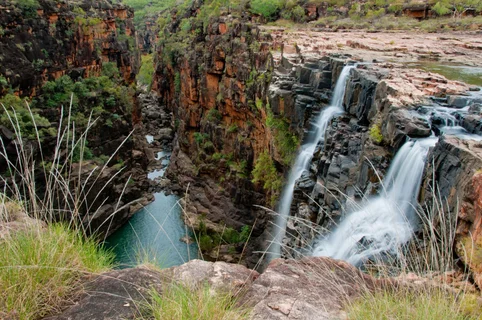


In the far north-west of Australia lies one of the world’s last great intact tropical landscapes. The Kimberley is a place of ancient sandstone ranges, vast savannahs, monsoon forests, mangrove-lined coasts and some of the least disturbed ecosystems left on Earth. During the wet season, rivers surge across the landscape, reconnecting floodplains, wetlands and estuaries in an explosion of life. Humpback whales migrate along the coast, freshwater sawfish move through inland rivers, and species found nowhere else on Earth continue to survive in one of Australia’s last truly wild regions. At the heart of this landscape flows Martuwarra / Fitzroy River. Stretching more than 700 kilometres from the Wunaamin Miliwundi Ranges to King Sound, Martuwarra is one of the largest and most intact free-flowing river systems in the world. It supports globally significant populations of critically endangered freshwater sawfish, ancient boab trees, rich floodplain ecosystems and a remarkable diversity of wildlife. For Traditional Custodians, Martuwarra is far more than a river. It is a living ancestral being. The river is cared for by the peoples of the Martuwarra Fitzroy River Council, representing Bunuba, Gooniyandi, Nyikina, Wangkatjunka and Walmajarri Traditional Custodians. Their vision is rooted in the understanding that the river has its own life, spirit and rights, and that caring for Martuwarra is inseparable from caring for culture, Country and future generations. Over the past decade, the Kimberley has faced repeated threats from coal mining, large-scale irrigation schemes, water extraction and proposals to expand gas fracking across the region. One of the most significant battles was the successful campaign to stop the Duchess Paradise coal mine on the banks of Martuwarra. More broadly, the Wilderness Society has worked with Traditional Owners and communities to oppose fracking and industrialisation across the Kimberley and Great Sandy Desert. Yet the pressures continue. Powerful interests are still seeking to extract billions of litres of water from the river system and open vast areas of the Kimberley to unconventional gas development.
What Is at Risk
The Kimberley remains one of the largest intact tropical landscapes left on Earth. Martuwarra supports globally significant biodiversity, critical habitat for endangered species and one of the most important living cultural landscapes in Australia. Fracking, mining, dams and large-scale irrigation could permanently alter river flows, pollute groundwater, fragment ecosystems and undermine the cultural and ecological integrity of the region. Once industrialisation begins, the interconnected systems that have sustained life here for millions of years may be impossible to restore.
The Campaign
The Wilderness Society supports First Nations-led efforts to protect Martuwarra and the wider Kimberley. Working alongside the Martuwarra Fitzroy River Council, Traditional Custodians, scientists and local communities, the campaign combines advocacy, scientific research, public mobilisation and on-Country programs such as the Martuwarra River Keepers initiative. This work is grounded in a powerful vision: that healthy rivers, thriving cultures and sustainable livelihoods can be built by caring for Country rather than exploiting it. The goal is to ensure that Martuwarra continues to flow free—sustaining life, culture and one of the last great intact landscapes on Earth.