

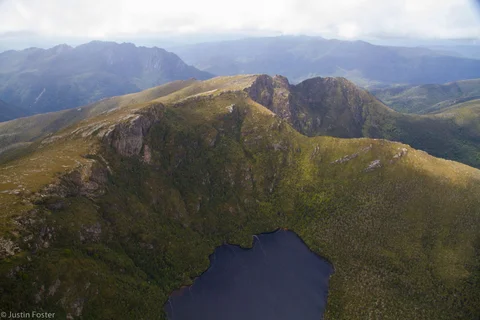


High on Tasmania’s Central Plateau, surrounded by alpine moorlands, glacial lakes and sweeping views of the Tasmanian Wilderness World Heritage Area, lies Lake Malbena.
Remote, quiet and profoundly beautiful, this highland lake is part of one of the world’s great temperate wilderness systems. Cushion plants cling to ancient soils. Pencil pines endure in harsh alpine conditions. Native fish move through cold, clear waters, while migratory birds and endemic species rely on this fragile landscape for refuge.
For palawa people, this region forms part of a living cultural landscape connected to thousands of generations of knowledge, movement and care for Country.
At first glance, Lake Malbena appears untouched. Yet in recent years, this remote place became the centre of one of Australia’s most significant debates about the future of protected areas.
In 2018, the Tasmanian Government approved a proposal by private tourism operator Wild Drake to construct luxury helicopter-accessed accommodation within the Tasmanian Wilderness World Heritage Area. The development included private huts, a standing camp, helicopter landings and associated infrastructure in a landscape internationally recognised for its wilderness values.
For many, the issue extended far beyond a single tourism proposal. The central question was whether areas protected for their remoteness, ecological integrity and wilderness character should be opened to exclusive commercial developments.
If such developments were allowed in one part of the World Heritage Area, what would stop others from following?
Lake Malbena quickly became a symbol of a much larger struggle over the meaning and purpose of wilderness protection.
What Is at Risk
Lake Malbena represents a critical precedent for the management of World Heritage and wilderness areas.
If private commercial developments are allowed in remote protected landscapes, the concept of wilderness as a place free from industrial and exclusive development is fundamentally weakened.
The issue is not only the direct ecological impact of infrastructure and helicopter access, but the broader precedent that internationally recognised wilderness areas can be incrementally commercialised.
Once that principle is compromised, other remote places may face similar pressure.
The Campaign
The Wilderness Society is defending Lake Malbena to uphold the principle that some places should remain truly wild.
Working alongside community groups, legal advocates, scientists and supporters, the campaign has used public advocacy, legal action and international attention to challenge inappropriate development within the Tasmanian Wilderness World Heritage Area.
The vision is to ensure that World Heritage protection means exactly what it promises. That places recognised for their outstanding universal value are safeguarded for nature, culture and future generations—not opened to private development.
Because wilderness is valuable precisely because it remains beyond the reach of human ambition. And some places should stay that way forever.