



Across Australia, a dangerous idea is gaining momentum.
Political leaders and fossil fuel companies are once again calling to “open up” new oil and gas fields. They frame it as energy security. Economic growth. National interest.
But beneath the slogans lies a stark reality. This is a push to industrialise some of the most intact and ecologically significant wilderness areas left in Australia.
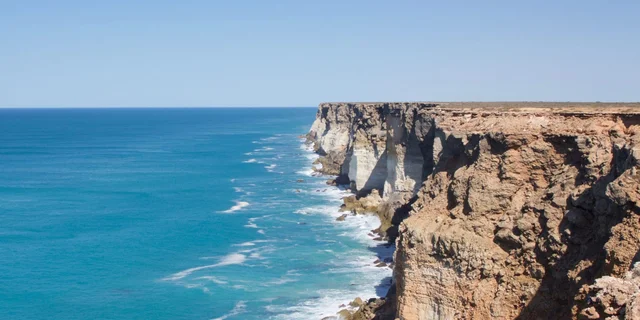
Places where southern right whales gather to calve in the Great Australian Bight. Ancient forests still stand in the Pilliga Forest. Free-flowing desert rivers sustain life across the Channel Country and Lake Eyre Basin. The Kimberley coastline and rivers continue to support cultures and ecosystems that have endured for tens of thousands of years.
These are not empty landscapes waiting to be exploited. They are living systems that regulate climate, store carbon, sustain biodiversity and hold profound cultural significance for First Nations peoples.
And they are now on the front line of a renewed fossil fuel expansion.
The Wilderness Society’s Stop New Fossil Fuels campaign makes clear that Australia has a critical choice to make: continue expanding fossil fuels, or protect wilderness and the ecosystems that sustain life.
What Is at Risk
The consequences of new oil and gas expansion reach far beyond any single project.
Seismic blasting disrupts whales and marine life. Drilling and fracking threaten groundwater and river systems. Roads, pipelines and industrial infrastructure fragment habitats and open intact ecosystems to further destruction.
At the same time, every new fossil fuel development deepens the climate crisis—driving hotter temperatures, more intense bushfires, droughts, floods and accelerating species extinctions.
What is at stake is nothing less than the destruction of the last large, intact ecosystems that help regulate the climate and support life on Earth.
The Campaign
The Wilderness Society is standing up against the renewed push for oil and gas expansion. It is a campaign to confront the industries and political forces driving destruction—and to defend the forests, rivers, oceans and wild places that still sustain life.
The strategy combines investigative research to expose emerging threats, legal action to challenge weak regulation and unlawful approvals, First Nations partnerships grounded in care for Country, public mobilisation and digital campaigning, and national fundraising to build a dedicated Oceans and Wilderness Defence Fund.
Ecosystems are not disappearing by accident. They are being opened up, piece by piece, in the pursuit of profit.
Our history shows that when people stand together, even the most powerful industries can be stopped.