

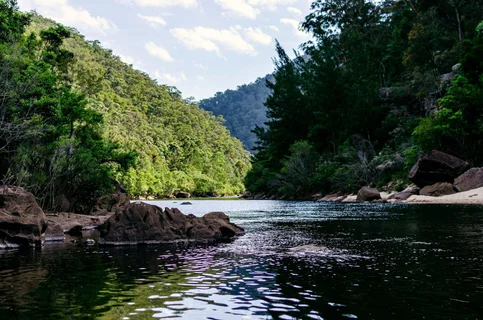


Hidden within the rugged sandstone wilderness of New South Wales lies a forest that carries the memory of deep time. Wollemi National Park is part of the Greater Blue Mountains World Heritage Area—a vast landscape of towering cliffs, hidden gorges, ancient rainforests and extraordinary biodiversity. Within its labyrinth of canyons survives one of the rarest trees on Earth: the Wollemi pine. Thought to have been extinct for more than two million years, the Wollemi pine was dramatically rediscovered in 1994 by National Parks officer and botanist David Noble in a remote canyon whose location remains secret to protect the remaining wild population. Often described as a “living fossil,” the Wollemi pine traces its lineage back to the age of dinosaurs. But Wollemi is far more than the refuge of a single species. The park protects vast tracts of eucalypt forest, sandstone pagodas, hanging swamps and rainforest pockets that support more than 50 mammal species, hundreds of bird species and threatened wildlife including the glossy black-cockatoo, powerful owl and regent honeyeater. For the Wiradjuri, Dharug, Darkinjung and neighbouring peoples, this is ancient cultural Country, rich in rock art, ceremonial sites and enduring connection. In the Black Summer bushfires of 2019–2020, around 81 per cent of the Greater Blue Mountains World Heritage Area burned. In a remarkable emergency operation, specialist firefighters were deployed to protect the secret groves of Wollemi pine using irrigation systems, fire retardant and precision water bombing. The trees survived. Yet soon after the fires, a new threat emerged. In 2020, the New South Wales Government released areas on the western edge of Wollemi National Park for potential coal exploration. Communities, scientists and conservation groups warned that opening this globally significant landscape to fossil fuel development was incompatible with protecting its extraordinary natural and cultural values.
What Is at Risk
Wollemi National Park safeguards one of the world’s rarest trees and a globally significant World Heritage landscape. Coal exploration and other industrial activities threaten water systems, wildlife habitat and the ecological integrity of this ancient forest. At a time of accelerating climate change, landscapes like Wollemi are vital refuges for species that have already survived millions of years of environmental change. Without continued vigilance, these extraordinary natural and cultural values could once again be placed at risk.
The Campaign
The Wilderness Society is continuing to defend Wollemi and the Greater Blue Mountains from industrial threats. Working with Traditional Owners, scientists, local communities and supporters across Australia, the campaign mobilised public opposition to coal exploration and helped secure the withdrawal of proposed release areas. The broader vision is to ensure that this World Heritage landscape remains permanently protected. A place where ancient trees, hidden canyons and living cultural stories continue to endure. Because some forests are so extraordinary, they belong not just to our time—but to all time.